At the end of February and beginning of March, a new phase of escalation in the Middle East, marked by strikes carried out by the United States and Israel on Iranian territory, triggered a chain reaction: reprisals, increased tension in the Gulf, partial closures of airspace and, above all, the return of a scenario that continues to worry international trade operators: the risk to the Strait of Hormuz.
The aim here is not to recount the political and military events. The angle is different: to understand the mechanisms by which a regional crisis can, in a matter of hours, become a matter of costs, delays, and contractual risks for flows that sometimes have nothing to do with Iran.
Just to clarify: we will stick to our area of expertise here: international trade, logistics, costs, and risks. The human and humanitarian dimension is obviously central, but it is simply not our field, and we do not claim to cover it here.
The primary transmission channel: energy (and risk premium)
As soon as tensions rise in the region, oil prices react. Not only because supply would be immediately interrupted, but also because markets factor in a risk premium: the price includes the probability of a future incident. And we are already seeing fluctuations with peaks of around +8 to +10% depending on the trading session.
The key point remains Ormuz: a strategic passage through which a considerable proportion of global oil and gas flows transit: around 20%.
And this is an essential nuance for trade: Ormuz does not need to be "closed" for the economy to grind to a halt. A few credible threats, incidents, ships waiting in line, or shipowners temporarily suspending transit are enough to drive up energy prices... and, in turn, increase a wide range of costs (transportation, production, insurance, financing).
Maritime transport: tension leads to extra costs and delays
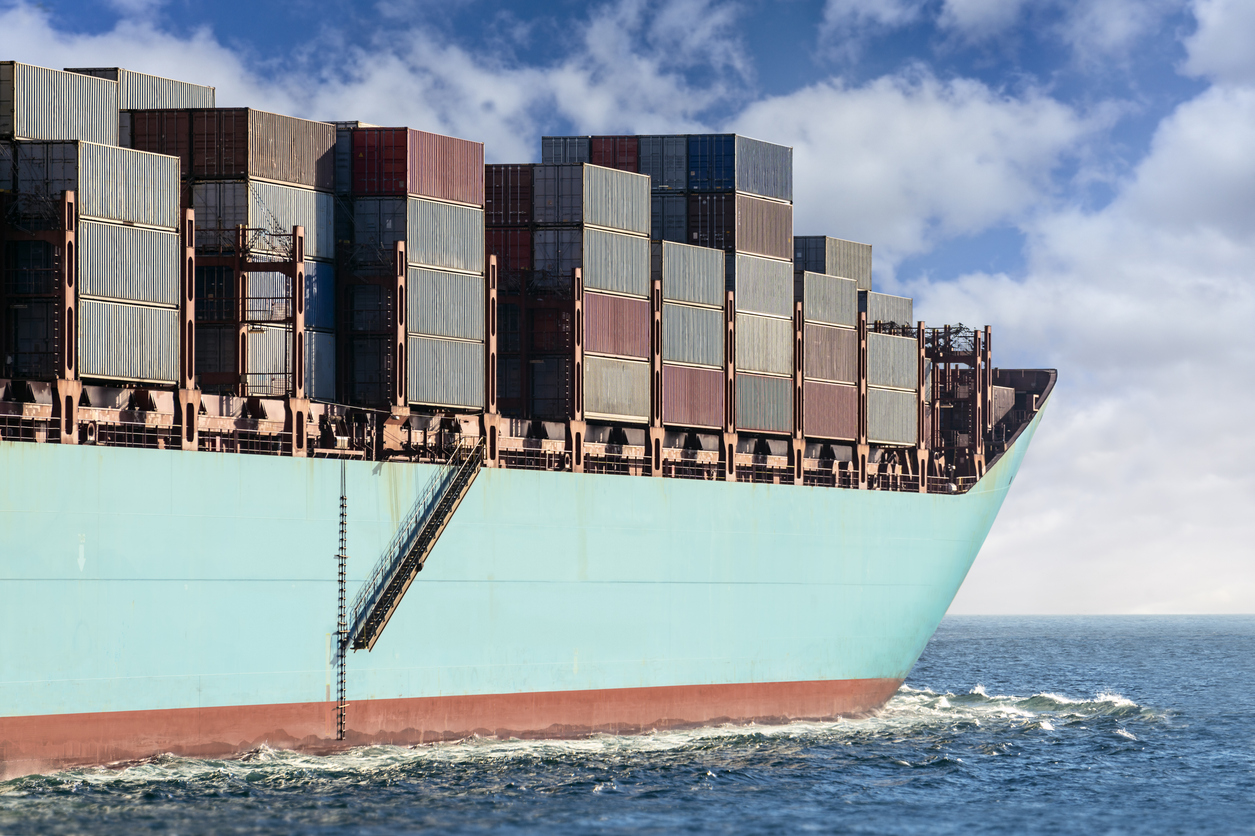
Maritime transport does not necessarily stop during times of crisis, but it becomes more expensive, slower, and more uncertain. Three phenomena dominate:
- War risk premiums: as soon as the perceived risk increases, insurance premiums rise, sometimes very quickly, and some insurers reduce coverage or tighten conditions.
- Surcharges and rerouting: even without blockages, carriers apply risk surcharges, and certain routes are avoided.
- The bottleneck effect: Ormuz is narrow. A few hours' wait can turn into queues, then port delays, rescheduling, and pressure on stocks, resulting in penalties or disputes.
What makes the situation particularly delicate is the discrepancy between visible costs (freight) and hidden costs: stock immobilization, temporary shortages, additional compliance costs, or commercial losses linked to poor service.
Air transport: closure of corridors = capacity shock
The impact on air travel is often severe. The region is a corridor, and when airspace closes or becomes restricted, we see cancellations, diversions, longer routes (and therefore higher fuel consumption), reduced capacity, and, inevitably, higher freight rates.
On certain routes, passenger operations and repatriations are naturally given priority, which further reduces the space available for cargo. As a result, for sectors operating on a just-in-time basis (pharmaceuticals, urgent parts, electronics, luxury goods, etc.), the crisis is less a shutdown than a costly combination of delays, rebookings, and surcharges.
The factor that really paralyzes: financial uncertainty
Financial markets typically respond by shifting toward safe-haven assets and increased volatility. But for trade, the most damaging signal lies elsewhere: a wait-and-see attitude. When uncertainty rises, many players put decisions on hold (orders, launches, logistics investments) until the situation becomes clearer. And when everyone waits at the same time, trade slows down.
Operational checklist: what should companies do?
When faced with this type of shock, the challenge is not to predict geopolitical developments, but to reduce the supply chain's sensitivity to the crisis.
- Putting geography back in charge
Mapping sea and air routes: which flows pass through which areas, which Gulf hubs are critical, what alternatives exist (even if more expensive), and within what timeframes. - Contractualize risk before it materializes
Review Incoterms, fuel clauses, force majeure clauses, responsibilities in the event of rerouting/delays/insurance. The goal is simple: avoid finding out "who pays for what" when the bill arrives. - Budget insurance as a dynamic cost
Don't treat insurance as a fixed cost: in times of crisis, it varies. Anticipate premium increases and possible exclusions. - Ensuring compliance and providing evidence
When tensions rise, inspections and disputes increase: evidence of transport, origin, value, compliance with sanctions/export control depending on the flow. Even if your goods are not linked to Iran, the rate of inspections tends to rise automatically.
Conclusion: a military crisis... and a cost crisis
Intervention and escalation between Iran, the United States, and Israel are not just a diplomatic issue: they quickly become a logistical, energy, financial, and insurance issue.
For operators, the watchwords can be summed up in three verbs: map (the routes), contract (the risk), and document (the evidence).
And the parallel is striking: whether it's armed conflict or trade war, international trade always pays the same price, that of instability, which translates into additional costs, complexity, and delayed decisions.
Looking for the right solution for your business?